Knowledge Library

A digital archive that brings together my life’s work on democracy, governance, and international cooperation.
Here you’ll find publications, speeches, and reflections that trace the ideas and experiences shaping my journey through decades of global engagement.

Start Browsing By Topic

Topic Check

Or Browse By Type of Content

Types Check

Revitalizing Support for Democracy Within the UN System

International IDEA, 2026

The Global Commission on Democracy and Multilateralism, convened by Club de Madrid in partnership with International IDEA, the Open Government Partnership, and the European Democracy Hub, was formed in 2025 to examine how the multilateral system can better uphold democratic principles amid increasing geopolitical fragmentation, democratic backsliding, and declining adherence to international norms. This background paper presents the findings of the Commission’s Working Group on Revitalizing Support for Democracy within the United Nations system, led by International IDEA. It examines how the United Nations can strengthen and protect democratic governance despite having no explicit mandate to promote democracy, highlighting work already undertaken across the system on electoral assistance, the rule-of-law, constitutional support, peacebuilding, human rights, anti-corruption, gender equality, and civic participation.

The paper calls for this work to be protected and adequately funded, alongside stronger coordination across United Nations entities, safeguards for established normative frameworks, and expanding partnerships with civil society and other actors. It also proposes more transformative reforms, including placing democracy at the center of the post-2030 development agenda, strengthening human rights mechanisms, expanding civil society, citizen, and parliamentary participation in United Nations processes, and making democracy a priority for the next United Nations Secretary-General. The paper urges Member States to demonstrate stronger political leadership through consistent advocacy, reporting, predictable funding, coalition-building with like-minded countries, and clear commitments from candidates for senior United Nations leadership on the importance of strengthening and protecting democratic governance as a critical enabler of the three pillars of the United Nations system: development, human rights, and peace and security.
MultilateralismUN

Migrantes y colonos de la sierra en la foresta tropical colombiana

Bulzoni, 1987

This study demonstrates the importance of collecting data through in-depth surveys in areas where sufficiently disaggregated information does not exist, making it possible to identify different migration flows and break them down into their elementary components.

AnthropologyMigration

Salute, sviluppo e cooperazione in Etiopia. L’esperienza italiana

Istituto Italo-Africano, 1990

This study examines the relationship between health, development, and international cooperation in Ethiopia, analysing in depth the role and outcomes of Italian cooperation initiatives during the 1980s. The introductory sections (pp. 11–13) highlight Ethiopia’s severe structural challenges—famine, fragile institutions, high child mortality, limited access to basic health services—as well as the political and economic constraints shaping health interventions. Drawing on empirical data and extensive field experience, the authors reconstruct the evolution of Italian-supported health programmes, from emergency responses to longer-term development efforts (pp. 13–17). The report provides detailed statistical evidence on demographic trends, disease burdens, and healthcare infrastructure (tables on pp. 15–21), illustrating both the scale of needs and the mixed results of international aid. Through country case studies and sector analyses, the text evaluates the effectiveness, limitations, and sustainability of Italian interventions, emphasising the importance of integrated strategies linking health services, community participation, training, and institutional strengthening. The authors argue that successful cooperation requires moving beyond short-term emergency logic toward coordinated, locally anchored health development policies (pp. 21–29

CollaborationPublic Health

La sanità difficile. Un programma di medicina comunitaria nelle regioni Hiran e Galgadud in Somalia

Istituto Italo-Africano, 1993

The volume is about the public health program in the regions Hiraan and Galgaduud carried out in Somalia as part of the bilateral cooperation with Italy and it examines the changes brought about by the program without losing sight of the social, political and economic changes.

AfricaAnthropologyCooperationPublic Health

Anthropologie, développement rural et participation dans la coopération italienne: Le cas de la Corne orientale de l’Afrique

Presses Universitaires du Septentrion et Ecole des Hautes Etudes en Sciences Sociales, 2022

Sviluppi matematici in antropologia: formalizzazione e isomorfismo

L’Uomo, 1984

The effectiveness of mathematical instruments used in anthropology depends on the theoretical and methodological background. The holistic approach typical of the anthropological tradition has sometimes led to the use of quantitative analysis being underestimated. The application of mathematical procedures is only one of the aspects of isomorphism, c.e. the degree of consistency between the models used by the researchers to represent the analyzed phenomena and the observed reality. In this contribution models elaborated by Goody, Geoghegan, Thompsonand Rappaport are examined. By comparing the four approaches, the theoretical assumptions are highlighted along with their influence on the choice and the use of different formalizations and quantitative mathematical procedures. Lastly the examined models’ potentialities and limits are evaluated in relation to morphogenesis phenomena characterizing the socio-cultural systems

Anthropology

Migrazione, colonizzazione e innovazione tecnologica tra gli Iraqw: il caso di Mbulumbulu, Tanzania

Africa, 1986

The present paper, based on 1984 field data, analyses the main factors determining the territorial expansion of the Iraqws into Mbulumbulu, e.g. demographic pressure and the occurrence of drought on the Iraqw plateau, the favourable attitude adopted by the British colonial administration to the settlement of Iraqw farmers in the lands belonging to the Masai herders, the practice of exile as the consequence of a state of ‘irange’ (sin) or ‘metimani’ (ritual impurity), generational conflict between ‘masombe’ (the young) and f barise ‘(the elders), competition between ‘kahamuse’ (from ‘kahamusmo’ orator), a kind of ‘primus inter pares’ in the council of elders, for control over the new territories. The paper also deals with the introduction of commercial crops, the increase of agricultural production and the mechanization of the area as a result both of handing over Northern Province Wheat Scheme land to the local populations, of technology transfer by the white settlers and of the extension of credit facilities to the Iraqw farmers from the ‘ fifties on.

AfricaMigration

Aggiustamento strutturale e sviluppo in Somalia: il negoziato con le istituzioni finanziarie internazionali

Africa, 1992

The paper analyses the development perspectives of the country, by means of a review of the main social and economic indicators available. The contents of structural adjustment and stabilization programmes, negotiated by the International Monetary Fund and the World Bank in Somalia during the ‘ 80s, are also analysed. The social impact of such programmes is then taken into account, by stressing the peculiarity of the Somali context. The inadequacy of measures of economic and institutional reform, in line with an abstract economic paradigm rather than consistent with the real economic processes (which are not properly reflected in official statistics), is also underlined. The limits of such measures, particularly when they are not accompanied — as in the Somali case — by a practice of good government, are finally emphasised.

AfricaEconomic Development

Emergenze e rischi dell’azione rapida

Forum Valutazione, 1994

This article explores the paradoxes and risks associated with rapid-response action in international cooperation, especially within humanitarian and post-crisis contexts. Tommasoli argues that the pressure to intervene quickly often generates structural weaknesses in project design, coordination, and long-term sustainability. As shown in the opening section (p. 125), emergency interventions tend to privilege immediate visibility and operational speed, sometimes at the expense of contextual analysis, participation, and institutional strengthening. The author critiques how the logic of urgency can reproduce dependency, distort local priorities, and limit the effectiveness of development initiatives once the acute phase ends (pp. 125–127). Drawing from concrete experiences of the Italian cooperation system, the article highlights critical tensions between emergency aid and development programming, emphasizing the need to integrate rapid action within coherent strategies that consider local actors, long-term objectives, and the continuity between relief and development. Ultimately, Tommasoli calls for a more reflective and strategic approach that balances rapidity with responsibility and contextual understanding


CooperationPeace & Security

Traditional institutions, social change and development in post-conflict Ethiopia

Africa, 1996

AfricaPeace & Security

Monitoraggio e valutazione nella cooperazione allo sviluppo

Forum Valutazione, 2002

This paper analyses the evolution of monitoring and evaluation (M&V) in development cooperation, with particular attention to the Italian context. It traces the historical phases that shaped evaluation practices internationally—from early cost-benefit approaches to the adoption of the Logical Framework, participatory methods, and results-oriented planning. The authors reconstruct how Italy progressively integrated evaluation into its cooperation system, culminating in the creation of a dedicated Evaluation Unit and structured programmes of in itinere and ex post assessment. A central contribution of the paper is the distinction between monitoring as an internal, continuous management tool and evaluation as an external, periodic learning and accountability function. The study concludes by stressing the need for flexible, participatory, and evidence-based evaluation approaches aligned with contemporary development paradigms.

Conflitti, pace e sviluppo in Africa: il ruolo della cooperazione internazionale

Africa

Africa, 2002

Violent conflicts in Third World countries, and especially in Africa, undermine the very foundations of social structures and in particular, the institutions capable of mediating conflicts. In this way they jeopardise the basic conditions for a peaceful society, with protracted effects in time and wide impacts on the ground. On the basis of the African case, we shall analyze the recognition of the development impact of violent conflicts as a crucial theme for development co-operation agencies over the nineties. We shall take into account the key features of a preventative approach based on the will to address the root causes of conflicts and their social, cultural and political dimensions, as well as the economic ones. To this end we shall critically consider the role of development co-operation in the framework of international policies of donor countries, including those related to foreign, trade, finance, defence and security policies. We shall finally focus on the role various actors -governmental, non-governmental and inter-governmental, as well as public and private actors -can play for preventing violent conflicts.

AfricaAnthropology

The 2030 Agenda for Sustainable Development, the SDG16, the Global State of Democracy

MEDirections EUI

SDGsUnited NationsVideo Appearance

La democrazia alla super sfida del 2024

Il Sole 24 Ore

Video Appearance

Verso una governance incentrata sulle persone in un mondo post-pandemico (2nd video)

Radio Radicale

Video Appearance

Verso una governance incentrata sulle persone in un mondo post-pandemico

Radio Radicale

Video Appearance

The Dynamics of Social and Economic Adaptation in Italy

Anthropological Approaches to Resettlement

International IDEA, 2019
This collaborative research examines how Italian society has adapted to the complex interplay of economic, demographic, and political transformations. It focuses on the social mechanisms that shape resilience and inclusion during periods of change. The study combines empirical data with qualitative analysis to explore adaptation within the broader European context. It provides valuable insights into how democratic systems respond to inequality, migration, and globalization.

Collaboration

Tra ricerca e mercato: centri di ricerca, agenzie di sviluppo e ONG

La Ricerca Folklorica, 1991
This early contribution investigates the relationship between research institutions, development agencies, and non-governmental organizations. It explores how knowledge production interacts with policy and market dynamics in the field of international cooperation. The paper emphasizes collaboration as a bridge between academic inquiry and practical implementation. It remains relevant for understanding how research can effectively inform equitable and participatory development strategies.

CooperationEconomic Development

Stockholm Series #3 with Greta Ríos: Democracy and Climate

International IDEA

International IDEA, 19 November 2024
This episode of the Stockholm Series brings together Dr. Massimo Tommasoli and Greta Ríos for an engaging dialogue on the nexus between democracy and climate action. They explore how inclusive governance can drive effective responses to environmental challenges while protecting civic space. The discussion underscores the urgency of integrating democratic accountability into climate policy frameworks.

Climate ChangeDemocracy

Anticorruption for Development – Global Forum

World Bank Group

World Bank Group, 26 June 2023
In this global forum hosted by the World Bank, Dr. Tommasoli addresses the intersection of corruption, governance, and development. He emphasizes that combating corruption is not only a moral imperative but a prerequisite for democratic stability and sustainable growth. The session features leading voices exploring policy innovation and cross-sectoral collaboration in governance reform.

Video Appearance

Cross-Cutting Issues in Gender Equality and Democracy

International IDEA

International IDEA, 2011
This talk focuses on the cross-cutting relationship between gender equality and democratic governance. It explores how inclusive policies and representation enhance the legitimacy and resilience of democratic institutions. The discussion situates gender equality at the heart of the democracy agenda, linking it to peacebuilding and development.

DemocracyGender EqualityVideo Appearance

UN Commitment: The Beginning of the Path

International IDEA

International IDEA, 2011
This appearance highlights the United Nations’ evolving commitment to advancing democracy and gender equality. Dr. Tommasoli reflects on the UN’s role in promoting inclusive governance and supporting democratic transitions. The session underscores the importance of global partnerships and long-term institutional reform.

DemocracyUnited NationsVideo Appearance

The Global State of Democracy 2024 – Global Launch Event

International IDEA

International IDEA, 17 September 2024
At the global launch of The Global State of Democracy 2024, Dr. Tommasoli contributes to a high-level panel assessing the health of democracy worldwide. The event brings together policymakers, scholars, and civil society to discuss current trends, challenges, and policy responses. His intervention focuses on the need to rebuild democratic trust and strengthen participatory institutions amid global uncertainty.

DemocracyVideo Appearance

SDG 16 as a Key Vector for Eliminating Poverty

International IDEA / SDG Data Initiative

International IDEA / SDG Data Initiative
In this discussion, Dr. Tommasoli examines Sustainable Development Goal 16 — Peace, Justice, and Strong Institutions — as a cornerstone for eradicating poverty. He highlights how democratic governance and accountable institutions are essential for equitable growth and sustainable development. The conversation explores the interlinkages between peace, justice, and inclusion within the global SDG framework.

Video Appearance

Conversazione con Massimo Tommasoli

Antropologia Pubblica

Università di Bologna, 2018
In this academic interview, Dr. Massimo Tommasoli reflects on his career at the intersection of diplomacy, development cooperation, and democratic governance. Conducted within the context of the University of Bologna’s research on anthropology and cooperation, the conversation explores how global institutions engage with cultural diversity and political transformation. The dialogue highlights the importance of bridging theory and practice in advancing participatory and ethical approaches to international development.

DemocracyItalian

Democracy, Peace and Security: The Role of the United Nations

United Nations Digital Library

United Nations Digital Library, 2010
This book explores the United Nations’ contribution to promoting democracy as a foundation for peace and global security. It provides a comprehensive analysis of how democratic governance enhances conflict prevention and sustainable development. The author discusses the importance of legitimacy, participation, and institutional strength in fostering stability. The volume positions democracy as both a goal and a method for achieving a more peaceful international order.

DemocracyPeace & SecurityUnited Nations

Lo sviluppo partecipativo

Carocci Editore

Carocci Editore, 2001
This early work delves into participatory development as a democratic approach to global cooperation. It discusses methodologies that prioritize local voices, community engagement, and shared decision-making in project design and evaluation. The author highlights how participatory processes can strengthen social cohesion and accountability, particularly in post-conflict and transitional settings. The book remains a valuable reference for understanding the human dimension of development practices.

DemocracyMultilateralism

Nel nome dello sviluppo

Carocci Editore

Carocci Editore, 2024
In this volume, the author explores the meaning and contradictions of “development” as both an aspiration and a contested concept. Drawing from decades of field experience and academic work, it questions whether development interventions truly empower communities or risk reproducing dependency and inequality. Through a reflective and critical lens, the book offers insights into how development discourse shapes policy and global relations. It invites readers to rethink what progress means in the 21st century.

DemocracyMultilateralismPeace & Security

Politiche di cooperazione internazionale

Carocci Editore

Carocci Editore, 2024
This book offers an updated and critical overview of international cooperation policies in an era marked by geopolitical shifts, climate urgency, and global inequality. It examines how development paradigms have evolved from aid to partnership, emphasizing local ownership and sustainability. The author reflects on Italy’s role in global cooperation and the balance between ethical responsibility and political realism. The work provides readers with analytical tools to understand the challenges of development policy today.

DemocracyMultilateralism

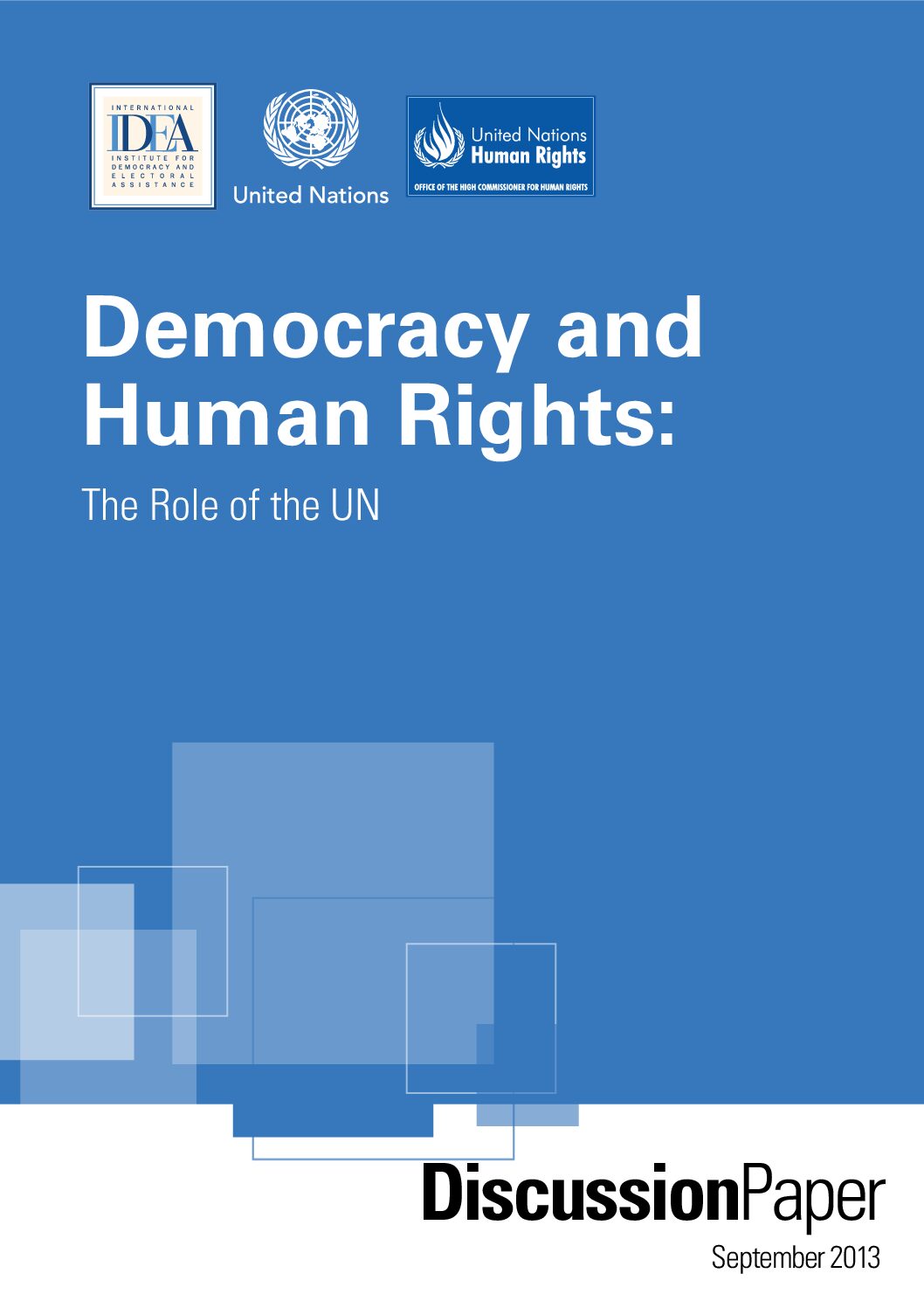
Democracy and Human Rights: The Role of the United Nations

International IDEA

International IDEA & United Nations, 2013
Edited by Dr. Massimo Tommasoli, this discussion paper summarizes an international roundtable co-organized by International IDEA, the UN Department of Political Affairs, and the Office of the High Commissioner for Human Rights. It explores how democracy and human rights are mutually reinforcing and how the UN can promote a rights-based approach to democratic governance. The report highlights the importance of inclusive constitution-making, participatory dialogue, and institutional accountability as foundations for sustainable democracy. It calls for stronger UN coherence and a peer-review mechanism to assess Member States’ democratic commitments under international human rights treaties.

Tag1tag2tag3tag4tag5

Un antropologo nella cooperazione allo sviluppo

Antropologia Pubblica

Antropologia Pubblica, 2022
Written in Italian, this paper reflects on the role of anthropology in international development cooperation. It offers an interdisciplinary perspective on how cultural understanding and ethnographic methods can enrich policy design and project implementation. The author underscores the value of human-centered approaches that recognize diversity, context, and local agency in development work. It bridges the worlds of academia and practice, inviting a deeper reflection on the ethics of global cooperation.

Democracy and Gender Equality: The Role of the United Nations

International IDEA

International IDEA, 2013
This paper examines how democratic governance and gender equality intersect within the United Nations’ agenda. It highlights that true democracy requires the full participation and representation of women in decision-making processes. The author reviews international frameworks promoting gender parity and identifies persisting challenges in implementation. The paper emphasizes that empowering women politically is not just a matter of justice but a foundation for stronger, more resilient democracies.

Democracy, Peace and Security: The Role of the United Nations

International IDEA

International IDEA, 2011
This paper explores the intricate connections between democracy, peace, and international security through the lens of the United Nations’ evolving role. It argues that sustainable peace depends on democratic institutions that foster participation, accountability, and inclusion. The author analyzes how democratic governance can prevent conflict by addressing inequality and strengthening civic trust. The paper calls for a more coordinated global effort to integrate democratic principles into peacebuilding and security frameworks.

Conversations on Democracy: Dr. Massimo Tommasoli

International IDEA

International IDEA, 2015
In this interview, Dr. Massimo Tommasoli reflects on the evolving challenges and opportunities facing democracy worldwide. He discusses the importance of inclusive institutions, citizen participation, and the global exchange of democratic practices. Drawing on his experience at International IDEA, he highlights how electoral integrity and political accountability remain essential to rebuilding public trust. The conversation emphasizes that democracy must be continuously renewed through dialogue, transparency, and collaboration across societies.

“Siamo tutti in pericolo”: The Death of a Poet and the Power of Dissent

La Voce di New York

La Voce di New York, 2014
This article reflects on the legacy of Pier Paolo Pasolini and his enduring relevance in Italy’s political and cultural conscience. Through the lens of Pasolini’s death, it examines the tension between truth-telling and conformity in public discourse. The author situates Pasolini’s critique within broader debates on freedom of expression, dissent, and the moral responsibilities of intellectuals. It serves as both a tribute and a reminder of how art and activism intersect in defense of democratic values.

Inequality, Vulnerability to Violent Conflict and Aid: Addressing Root Causes

ResearchGate
This study explores how deep-rooted inequality and social exclusion increase societies’ vulnerability to conflict and instability. It calls for development aid that goes beyond technical assistance to tackle the structural drivers of violence. The author emphasizes inclusive growth, social justice, and equitable access to opportunities as essential conditions for peace. The article urges policymakers to view inequality not just as an economic issue but as a central challenge to democratic governance.

The Financial and Economic Crisis: Some Implications for Development Cooperation

International IDEA

International IDEA, 2009
This article examines how the 2008 global financial crisis reshaped international development cooperation and aid effectiveness. It highlights the ways in which fiscal austerity, reduced donor budgets, and shifting priorities have weakened commitments to poverty reduction and global equity. The author argues for a renewed focus on solidarity, accountability, and long-term partnerships in development policy. The piece underscores that economic crises test not only markets but also the democratic and ethical foundations of global governance.

The Post-2015 Agenda: The Need for a Democratic Global Governance

International IDEA

International IDEA, 2014
This article argues that democracy must be embedded in the global development agenda beyond 2015. It links democratic governance to sustainable progress, highlighting participation, transparency, and inclusivity as prerequisites for effective global cooperation. The author calls for rethinking international frameworks to ensure accountability and voice for all nations, especially in the Global South. The piece reflects on how democratic legitimacy enhances both national and global decision-making.

The Way We Were: Humanitarian Missions and Boat Refugees

International IDEA, 2019
This reflective essay revisits the moral and political challenges surrounding Europe’s response to migration and humanitarian crises. Drawing on historical parallels, it questions how solidarity and compassion have evolved in the face of increasing polarization. The author examines the role of humanitarian missions in restoring dignity to those displaced by conflict and poverty. Ultimately, it calls for renewed empathy and responsibility in shaping migration policies consistent with democratic values.

Civil Society, Donor Assistance and Electoral Processes: Towards Greater Coherence

UN I-Library

UN I-Library, 2013
The article analyzes the evolving role of civil society in supporting electoral integrity and democratic consolidation. It critiques donor approaches that prioritize short-term election support over long-term institution building. Emphasizing coherence and local ownership, it argues for aligning international assistance with grassroots democratic participation. The piece advocates for partnerships that strengthen civil society as a key actor in democratic resilience.

Rule of Law and Democracy: Addressing the Gap between Policies and Practices

UN I-Library, 2012
This article explores the persistent gap between formal commitments to democracy and the real-world implementation of rule of law principles. It examines how weak institutions, corruption, and inequality hinder the translation of democratic norms into practice. The author stresses the need for accountability mechanisms and citizen engagement to reinforce trust in governance. The piece positions democracy and rule of law as mutually reinforcing pillars of sustainable development.


Education for Democracy Statement

International Institute for Democracy and Electoral Assistance (International IDEA)

International IDEA, 2012This statement underscores the central role of education in cultivating democratic values and active citizenship. It highlights how democratic learning environments foster tolerance, critical thinking, and respect for human rights. The piece calls for integrating democracy education at all levels to strengthen institutions and civic participation. By linking education with sustainable development and peace, it frames learning as both a right and a democratic responsibility.